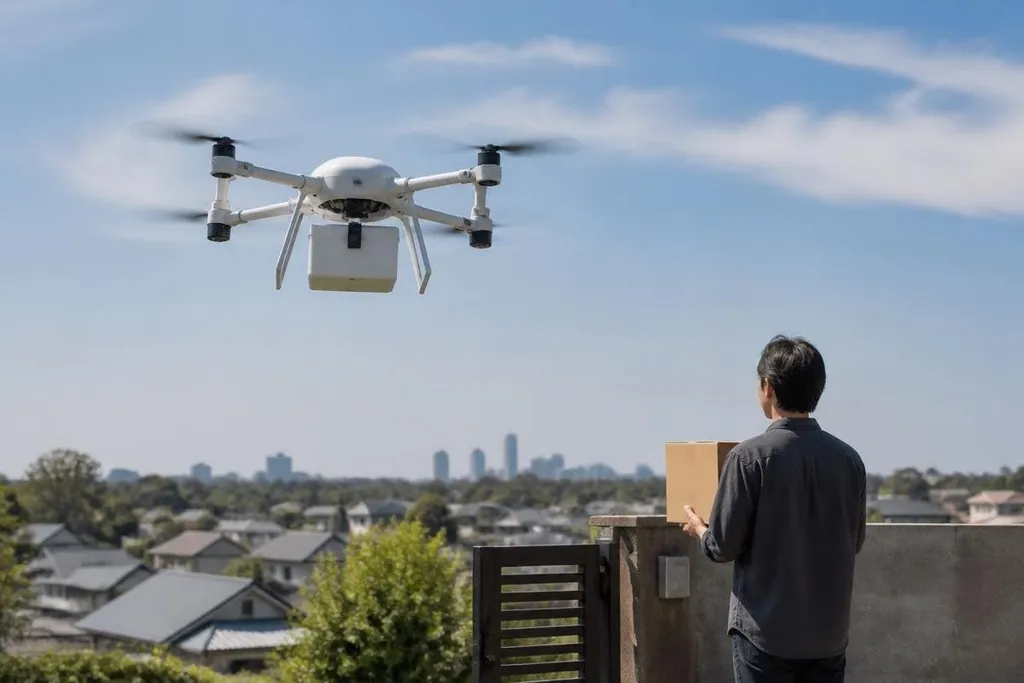
A delivery drone can cover a route without a driver, but that flight is only one part of the job. The hard work starts when the drone must choose a safe route, carry the right parcel, reach the customer, and return with enough battery.
Quick read
- Delivery drones fit small, time-sensitive parcels better than heavy shopping loads.
- Beyond-visual-line-of-sight approval will shape where operators can fly.
- Landing, handoff, weather, charging, and public safety will decide the cost.
The aircraft is only the first piece
A delivery drone needs a flight controller to manage movement, motors to create lift, sensors to track its position, and a battery that must carry both the aircraft and its parcel.
Every added kilogram affects flight time, so payload and range pull in opposite directions. That limit points to a practical role. A drone may suit medicine, food, spare parts, or another small item where speed matters more than carrying capacity. A large grocery order needs a different vehicle because the drone must reserve battery power for takeoff, route changes, and landing.
The handoff also changes the design. The aircraft can lower a parcel on a cable, land in a prepared area, or place the package inside a secure box. Each method needs a clear location and a way to confirm that the right person received the delivery.
Regulation will shape the routes
Many delivery flights will need to operate beyond the pilot’s direct view. That means the operator must manage aircraft identification, airspace limits, emergency procedures, and other traffic without relying on a person watching the drone from the ground.
Autonomous systems can follow planned routes and react to sensor data, but they still need rules for lost communications, low battery, blocked landing areas, and people entering the flight path. A route that works on a quiet test site may need changes in a dense neighborhood.
A delivery drone’s route only matters if it can finish the drop under real rules. Delivery-drone reporting from Robot24.com can tie aircraft design to permits, remote-control plans, and landing work that decide if a flight can leave the test site.
The delivery point is the hard part
An aircraft can reach a street and still fail the delivery. Trees, wires, roofs, balconies, pets, and pedestrians can make a landing area unsafe. GPS can place the aircraft near the address, but a final handoff needs a better view of the ground.
Operators may use marked landing pads or fixed parcel boxes to reduce that uncertainty. Those systems add hardware at the customer’s home, which brings new questions about installation, access, weather protection, and who fixes the box when it stops working.
Privacy will also affect public acceptance. Cameras and other sensors may be needed for safe flight, but operators will need clear limits on what the drone records, how long data stays stored, and who can access it.
What will make the service useful
The strongest business case will come from routes that are hard for a van and easy for a small aircraft. A remote clinic, a spread-out community, or a site with a regular need for small spare parts may gain more from drone delivery than a dense street with short driving distances.
Cost will include more than the aircraft. Operators need trained staff, charging equipment, maintenance, software, insurance, customer support, and a response plan for failed deliveries. A drone that flies well but needs frequent manual help may shift work rather than reduce it.
I’d judge a delivery-drone service by its routine failures, not its best flight video. The useful numbers are completed handoffs, battery swaps, weather cancellations, return flights, and the time needed to resolve a missed delivery.
A practical test for future deployments
Before an operator expands a service, check these points:
- Parcel fit: Set a clear weight and size limit for the items the drone can carry.
- Route control: Define how the system handles restricted airspace, lost links, and route changes.
- Landing safety: Test the handoff area with people, trees, wires, and poor visibility present.
- Battery planning: Keep enough reserve for a return flight, not only the outbound trip.
- Service recovery: Set a human process for damaged parcels, failed drops, and customer complaints.
- Data rules: Tell customers what sensors record and how long the operator keeps that data.
Delivery drones will probably grow first in narrow routes where the parcel, landing point, and flight path are easy to control. The open question is how much human support each delivery will need once the weather changes or the planned handoff fails.